
First trip home with baby: safely home from hospital
Short answer: For the first trip home, you mainly need an approved rear-facing infant carrier that fits the baby and vehicle, correctly adjusted straps and an unhurried pick-up. Practise installing the seat before birth and keep only a nappy, spare clothes, cloth and discharge papers within reach.
Leaving hospital is a big moment and often the newborn’s first car journey. A clear routine is more useful than an overfilled bag. This guide focuses only on the journey home and complements our hospital-bag checklist. Hospital bag checklist.
First trip home at a glance
| Before pick-up | Securing the baby | On the road |
|---|---|---|
| Test the carrier in your car | Install rear-facing | Choose a direct, calm route |
| Check both manuals | Adjust straps close to the body | Keep a nappy kit within reach |
| Match clothes to the weather | No thick coat under straps | Stop safely if unsure |
1. Install the infant carrier before birth
The first drive should not be the first installation attempt. Check whether the carrier is approved for your vehicle and whether it uses an Isofix base or the vehicle belt. The seat and vehicle manuals always take priority. A rear-facing carrier on the front passenger seat may only be used with the front airbag deactivated.
German road law requires children under twelve who are shorter than 150 cm to use a suitable child restraint. A newborn therefore needs an approved, correctly fitting carrier even for a very short trip.
2. Secure the baby correctly
Place the baby in the carrier as described by the manufacturer. Straps must lie flat over the shoulders and fit closely without cutting in. Thick coats and padded suits create unwanted slack. In cold weather, use thin layers and place a light blanket over the fastened straps.
Important: Do not add inserts, strap pads or positioning aids unless the carrier manufacturer has approved them. Accessories can change the intended belt path.
3. What should the baby wear?
Clothing depends on outdoor temperature, car temperature and journey length. Several thin layers are easier to adjust than a thick snowsuit. Our winter clothing guide explains the differences between home, pram and car. Winter clothing guide.
Check the neck during a safe stop. Cold hands alone do not reliably show whether a baby is cold. If the baby looks unusually pale, very sleepy or unwell after discharge, contact the hospital, midwife or paediatric practice.
4. A small discharge bag is enough
- one nappy and wipes or a washcloth
- one complete change of clothes
- one muslin cloth
- a foldable changing mat
- discharge papers and the child health record if supplied
- only feeding items agreed with the hospital, midwife or doctor
For a normal short drive, a newborn does not need toys or a large travel bag. Keep the essentials separate from the main hospital luggage.
5. Who drives and where does the baby sit?
Ideally, one support person drives while the parent who gave birth can recover. The back seat, often behind the front passenger, makes kerb-side access easier. The manuals determine which seating positions are approved.
Plan the direct route. If the baby cries or the straps need checking, stop in a safe place. Never unbuckle or lift the baby out while the car is moving.
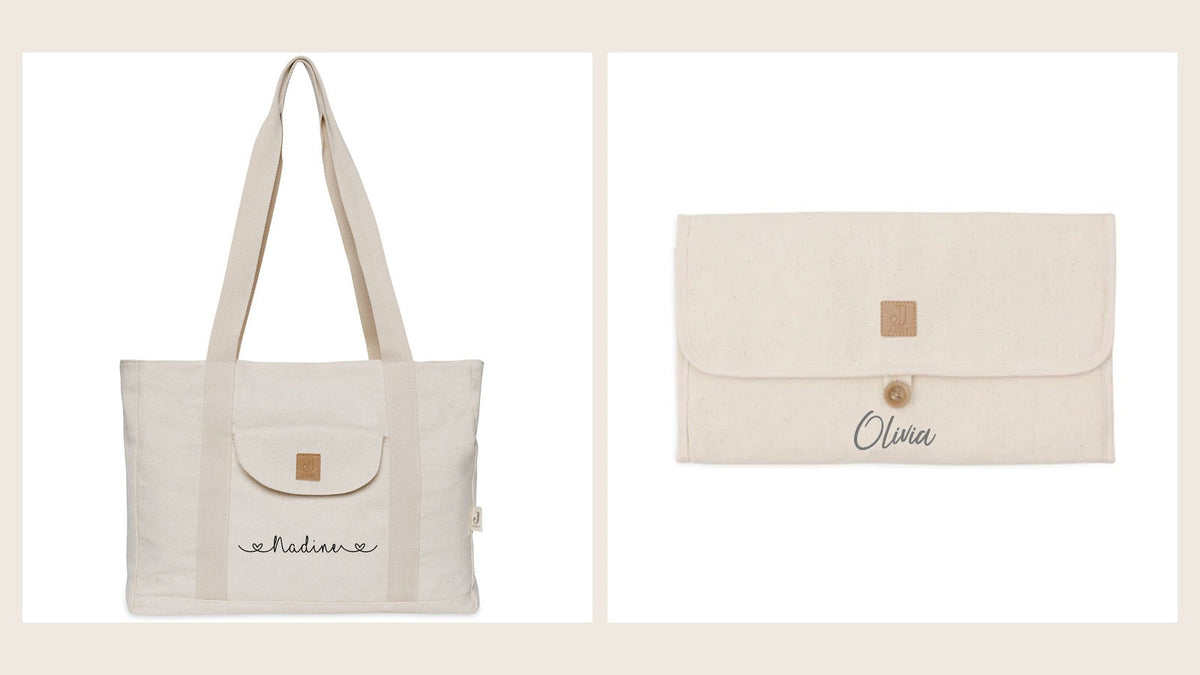
Practical helpers for the trip home and first outings
These products are not safety equipment. They only keep nappies, clothing and cloths organised. At the time of checking, all four products were active, public, in stock in at least one variant and published in both the German and EU market catalogues.


Common mistakes
- Trying the carrier for the first time on discharge day
- Putting thick clothing under the harness
- Leaving loose luggage next to the seat
- Starting under time pressure
- Leaving the carrier as a sleep place after arrival
Conclusion: safety before perfect planning
The first trip becomes easier when the carrier fits the car, installation has been practised and a small discharge bag is ready. At home, our first-night checklist is the next useful step. First night with baby.
Frequently asked questions
Is an infant carrier required?
A newborn in a car must use a suitable approved child restraint.
Can the carrier go on the front passenger seat?
Only if both manuals allow it; with a rear-facing carrier, the front airbag must be disabled.
Does the baby need a winter coat?
No. Use thin layers and put a light blanket over the fastened straps.
What belongs in the discharge bag?
A nappy, cleaning cloth, spare clothes, muslin cloth, changing mat and discharge papers.
What if the baby cries?
Stop safely before checking straps or comforting the baby.
Can the baby keep sleeping in the carrier?
After the drive, move the baby to a suitable flat sleep surface on their back where possible.
Sources
- kindergesundheit-info.de
- kindergesundheit-info.de: safe sleep
- ADAC: infant carriers
- German Road Traffic Regulations § 21
This guide does not replace individual advice from the hospital, midwife, paediatric practice or seat and vehicle manufacturers.
